
The panel will also recommend a fiscal consolidation road map for the central and state governments, study the impact of GST on the divisible pool, and propose performance-based incentives for states.

Cash withdrawal limits likely to continue
North Block and Mint Road seem likely to now stick to the earlier convention of the RBI governor coming to Delhi and being the only MPC member meeting the finance minister and senior bureaucrats on pre-policy meetings

For the startup ecosystem in India, the scorecard so far has been a mixed bag, observes Akhil Gupta.

Of the 2,562 customer complaints received between January 2020 and March 2021, a majority relate to illegal apps. At least two dozen suicide cases have been reported, perpetrated by the harassment by loan app operators, points out Tamal Bandyopadhyay.

Officials say telco still keen on process.

'The no-rate cut policy and preference to wait for the Budget and clarity on the fiscal front demonstrate RBI Governor Shaktikanta Das is maturing in his new role,' notes Tamal Bandyopadhyay.

The shift was sudden, quite unlike Shukla's departure from North Block, which had been anticipated for some months even before Singh''s first Budget.

New head of the Confederation of Indian Industry speaks.
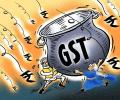
With Goods and Services Tax (GST) officers under pressure to exceed the Rs 1-trillion collection mark per month, industry has faced a barrage of recovery notices and summons issued over the last one month across sectors, according to company executives. Industry bodies have claimed harassment by field officers, blocking of input tax credit, cancellation of GST registration, threats of arrest and steep penalties, impacting their working capital and operations. Company executives pointed at an atmosphere of apprehension and fear due to such notices and summons.

Letter to corporate affairs ministry cites slowing economy, capital challenges.

Credible fiscal consolidation has been a consistent pre-condition to easing the monetary policy stance as far as the RBI is concerned.

Arvind Subramanian was appointed CEA in October 2014 and got a year's extension in September 2017

The 66-year-old finance minister underwent a successful kidney transplant surgery in mid-May and was on leave since April due to kidney-related problems and chest infection.
As many as 75 million households that do not have access to banking services will be covered and at least one bank account opened for each household, against the earlier proposal of two.

The losses in state elections in Rajasthan, Madhya Pradesh, and Chhattisgarh have put the ruling party under pressure to announce swift measures aimed at addressing rural distress and lack of employment.
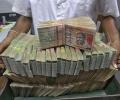
The list is of companies declared sick as on March 31, 2014.

'They have started becoming an important player, but not at the same level as they were in the earlier part of the decade.'

Budget-makers in North Block are looking to maintain this fiscal status quo, in spite of tax revenues nowhere close to where the government wants and in spite of possible higher expenditure commitments.

A look at six indicators shows all of them have collapsed from positive growth in April to contraction in September.

Short-term capital gains tax of 30% is likely to be levied if bitcoin is held for less than three years and 20% if held for longer than 36 months.

Chidambaram said there was no tension between the finance ministry and the Reserve Bank of India.

The Budget chose to stick to an ambitious disinvestment programme for 2016-17.

Experts say it will make GDP growth target of 5.7-5.8% difficult to achieve, while ministries feel late resurgence will help in sowing of rabi crops.
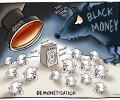
It was found the declarants were persons of suspicious nature and very small means, and the declarations could have been misused.

The headline for corporate profit growth has been very encouraging in the July-September quarter (Q2) of 2023-24 (FY24), with the combined net profit of listed companies up by 38 per cent year-on-year. However, the earnings distribution has been very lopsided, with most of the growth coming from public-sector oil-marketing companies (OMCs), banks, non-bank lenders, automobile (auto) companies, and cement producers. By comparison, companies from information technology services, fast-moving consumer goods (FMCG), retail, and consumer durables were disappointed, experiencing a sharp slowdown in net sales growth and a relatively muted increase in reported net profit.

The RBI expects the assessment to show if the systemic failure was only in PNB or in the overall banking universe

Instead, 2019-20 could be the base from which the Budget estimates for next year are calculated.
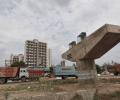
These could include strengthening the public-private partnership (PPP) dispute resolution mechanism, uniform PPP institutional framework, easier terms for infrastructure companies accessing bond markets, and tax sops, Business Standard has learnt. Investment in infrastructure projects with high multiplier effect has been the Centre's main plank to revive the economy, create employment and boost consumption.
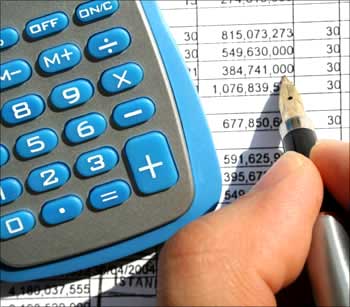
Credibility of fiscal promises is a virtue that no finance minister can afford to lose.
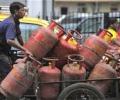
Govt expects to save Rs 10,000 crore through this move.

With just a month left in this financial year, electric two-wheeler sales, so far, are at just 62 per cent of the ambitious target of 1 million units set for 2022-23 by the NITI Aayog. According to VAHAN data, compiled by the Society of Manufacturers of Electric Vehicles (SMEV), 620,006 units of electric two-wheelers were sold across the country in FY23 until February 21. Though the industry may miss the 1-million target, sales in FY23 are already up 146 per cent from 249,621 units sold in FY22.

The minister tells Subhomoy Bhattacharjee that he wants to set up a financing corporation for the road and shipping sectors, which will throw up a business opportunity of Rs 25 lakh crore!
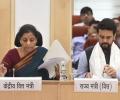
If the protected growth in GST revenue is reduced to 10 per cent, the Centre would save more than Rs 25,000 crore in 2020-21 if none of the states show any revenue growth. This would nearly amount to 0.1 per cent of the gross fiscal deficit and help the government in avoiding fiscal slippage to some extent in subsequent years.
